
Chicken Coop Size Calculator – Plan the Right Coop Space for Your Flock
Use this chicken coop size calculator to estimate how much indoor coop space your chickens need based on flock size, breed, and weather conditions.
Chicken Coop & Run Size Calculator
Advanced options
Get a practical starting point for planning a comfortable coop and run without doing the calculations yourself. Enter your flock details above to calculate your recommended coop size.
What Is a Chicken Coop Size Calculator?
A chicken coop size calculator helps you estimate the amount of space needed to house a specific number of chickens. Instead of relying on a single rule for every flock, this calculator considers factors such as:
- Number of chickens
- Chicken breed or size
- Outdoor Access
- As an advance option selects Weather conditions
Weather matters because chickens may spend considerably more time indoors during very cold, hot, wet, windy, or otherwise difficult conditions. A flock that can regularly use an outdoor run has different space requirements from one that may be confined to the coop for longer periods.
The result gives you a planning estimate for coop space, rather than a guarantee that a particular coop will be suitable for every flock.
Table of Contents
Chicken Coop Size Calculator
Use the calculator above to enter your flock information and get a recommended coop size. For the most useful estimate, provide the actual number of chickens you expect to keep and select the conditions that best match your location and housing setup.
What the Calculator Considers
The calculation is designed to account for:
- Flock size: More chickens require more total floor space.
- Chicken size or breed: Large breeds generally need more room than smaller breeds.
- Weather conditions: Weather can affect how much time chickens spend inside their housing.
- Planning needs: The result is intended to help you choose or design an appropriately sized coop.
Why Use a Chicken Coop Space Calculator?
Choosing a coop that is too small can make flock management more difficult, particularly when chickens are forced to remain indoors for extended periods.
A calculator gives you a quick way to turn your flock size and conditions into a practical space estimate. It can help you:
- Plan a new chicken house before buying materials.
- Compare different coop sizes.
- Estimate space requirements when adding chickens.
- Avoid choosing a coop based only on its advertised capacity.
- Plan indoor and outdoor areas together.
- Account for weather when deciding how much indoor space to provide.
The result can be used as a starting point for your coop design, purchase, or renovation.
How to Use the Chicken Coop Size Calculator
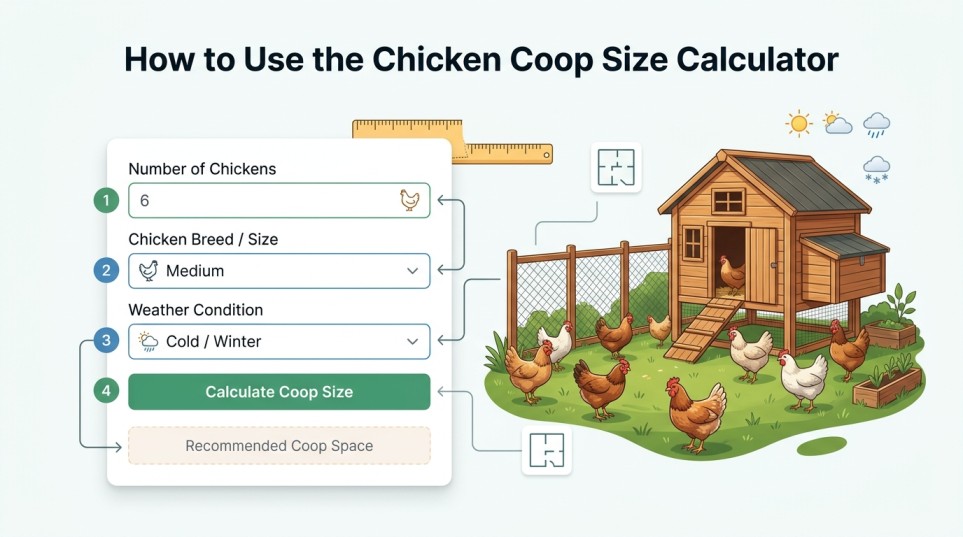
- Enter the number of chickens. Use the number you expect to house in the coop.
- Select the relevant breed or chicken size. Larger birds generally need more room than smaller birds.
- Choose the weather condition. Select the option that best represents the conditions your flock is likely to experience.
- Review the calculated space requirement. Use the result as a planning reference for your coop.
- Plan the run separately. Indoor coop space and outdoor run space serve different purposes, so consider both when designing the complete setup.
How Does the Calculator Work?
The calculator starts with the number of chickens and adjusts the space estimate according to the characteristics selected for the flock and its environment. A simple example is a flock of 6 chickens. Six small chickens with regular access to an outdoor area may have different indoor-space needs from six large chickens that could spend long periods inside because of severe weather.
The calculator therefore isn’t simply: Number of chickens × one fixed space value
Instead, the selected inputs are used to produce a more appropriate planning estimate.
Why Weather Is Included
Weather is particularly important when planning chicken housing. In favorable conditions, chickens can spend substantial time outside in a suitable run. During periods of extreme heat, cold, heavy rain, snow, strong wind, or other challenging conditions, they may spend much more time inside.
Providing enough indoor space for those periods can make your housing plan more practical and flexible.
Chicken Coop Size by Number of Chickens
The number of birds is one of the most important inputs when sizing a coop.
As your flock grows, the required floor area grows with it. For example, a coop intended for 4 chickens should not automatically be treated as suitable for 8 simply because the birds are small. Use the calculator rather than relying on a generic capacity label when planning a specific flock.
Chicken Coop Size Chart
A chart can be useful for quick comparisons, but a fixed chart cannot account for every flock or climate.

These ranges are only a planning guide. Use the chicken coop size calculator for a more tailored result, particularly when weather conditions may keep your chickens indoors for longer periods.
How Much Space Does a Chicken Need?
There is no single space figure that works equally well for every chicken-keeping situation. The appropriate amount depends on factors such as:
- Chicken size and breed
- Flock size
- Climate and weather
- How much time chickens spend outdoors
- Coop layout
- Run availability
- Ventilation and housing design
- Whether the birds can freely move between indoor and outdoor areas
For this reason, it’s better to think of coop capacity as a planning decision rather than simply dividing a coop’s floor area by a claimed maximum number of birds. If you are uncertain, allowing additional usable space can provide more flexibility, especially where weather may regularly limit outdoor access.
Chicken Coop Size by Breed
Breed can affect your calculation because chickens vary substantially in body size. A small bantam and a large-bodied chicken should not necessarily be assigned identical space requirements. Larger birds generally need more room to move comfortably, while flock behavior and the amount of time spent indoors also matter.
When using the calculator, choose the breed or size that most closely represents your flock. If you keep mixed breeds, use the option that best reflects the larger or more space-demanding birds when making a conservative housing plan.
Don’t Forget the Chicken Run
The coop is only part of the housing system. A chicken run provides outdoor space for movement, exploration, feeding, and normal flock activity when conditions allow. It should therefore be planned separately from the enclosed sleeping and shelter area.
A chicken run size calculator can help with outdoor planning, but the appropriate run design also depends on factors such as:
- Number of chickens
- Available land
- Predator protection
- Ground conditions
- Weather
- Drainage
- Whether the run is permanent or rotated
A larger outdoor area does not eliminate the need for adequate indoor shelter. Likewise, a spacious coop does not replace a suitable outdoor area when chickens are able to use one.
Planning a Chicken House
When turning the calculator’s result into an actual chicken house, remember that floor area is not the only consideration.
The finished housing should also allow enough room for the features your flock needs, including suitable roosting and nesting arrangements, feeding and watering equipment, and adequate ventilation.
Avoid designing the coop so that fixtures, equipment, or inaccessible corners consume most of the calculated usable floor area. Think of the calculator’s result as usable chicken space, not simply the outside dimensions of the building.
Important Limitations
The calculator provides a planning estimate, not a substitute for evaluating the finished housing. Several factors can affect whether a coop works well in practice:
- Individual chickens have different temperaments and activity levels.
- Breed sizes can vary.
- Weather conditions can change.
- Chickens may spend more or less time indoors than expected.
- Coop layout affects how effectively the available area can be used.
- Nesting boxes, feeders, waterers, roosts, and other fixtures take up space.
- Local animal-welfare or housing requirements may impose additional standards.
If local regulations or animal-welfare guidance specify a larger minimum space requirement, follow those requirements rather than relying solely on the calculator. And Local housing conditions, flock size, weather, and breed can all affect appropriate coop planning. Merck Veterinary Manual’s guidance on backyard poultry also emphasizes avoiding overcrowding
Frequently Asked Questions
What is a chicken coop size calculator?
A chicken coop size calculator estimates the indoor space needed for a flock based on factors such as the number and size of chickens and the weather conditions selected.
How many chickens can fit in my coop?
That depends on the usable floor area, chicken size, flock conditions, and how much time the chickens are expected to spend inside. Enter your flock information into the calculator rather than relying only on a manufacturer’s stated capacity.
Does weather affect chicken coop size?
Yes. Weather can influence how long chickens remain indoors. If poor or extreme weather regularly prevents outdoor access, providing more usable indoor space becomes more important.
Should I calculate coop and run space separately?
Yes. The coop provides enclosed shelter, while the run provides outdoor space. They perform different functions and should be planned as separate parts of the housing system.
Does chicken breed affect the space requirement?
It can. Chickens vary in size, and larger breeds generally require more room. Mixed flocks should be planned around the needs of the birds that require the most space.
Can I use the calculator for a mixed-breed flock?
Yes. Choose the breed or size option that best represents your flock. If your chickens vary considerably in size, using the larger birds as the planning reference can provide a more conservative estimate.
Is the calculator a legal minimum?
No. The result is a planning estimate. Local laws, animal-welfare regulations, agricultural guidance, or other requirements may call for different housing standards. Check the rules that apply where you keep your chickens.
Is a bigger coop always better?
Additional usable space can provide more flexibility, but good chicken housing also depends on layout, ventilation, cleanliness, security, roosting arrangements, nesting areas, and protection from weather and predators. Space should be considered as part of the complete coop design.
Use the chicken coop size calculator first to establish your indoor-space target, then use the result when comparing coop designs or planning a complete chicken housing area.
More tools
PC Wattage Calculator – Estimate the power requirements of your PC components.
Age Calculator – Calculate your exact age in years, months, days and hours
Fancy Text Generator – for decorative and fancy text variations
Cool Text Generator – create additional decorative text styles.